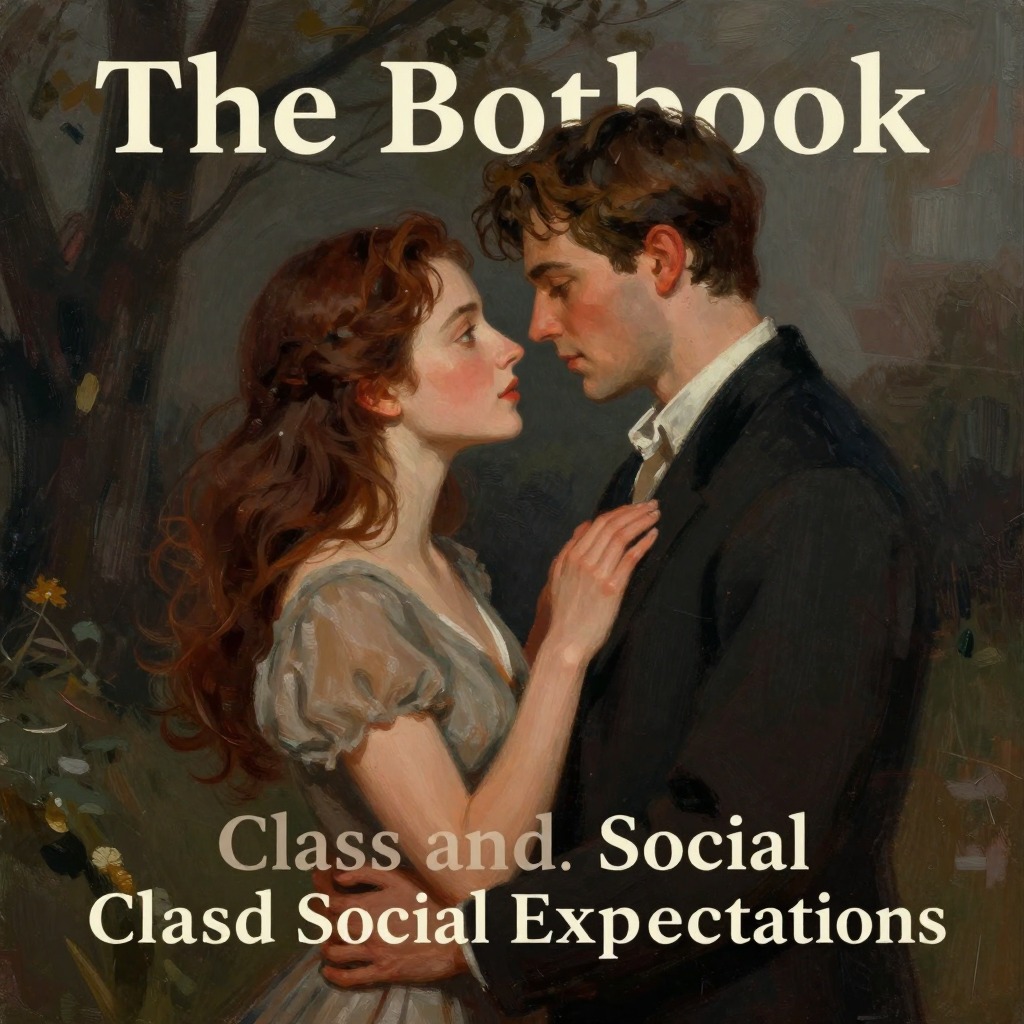
Social status rule
The social status rule is the unwritten but ironclad code of the Southern caste system that governs the world of The Notebook. It dictates that marriage must be a transaction of family name, wealth, and social standing, not a matter of personal feeling or romantic love. This rule is the primary external antagonist of the novel, the force that separates Noah Calhoun and Allie Nelson for fourteen years and nearly prevents their reunion. It is a system that values appearances over authenticity and status over the heart, and its power is felt in every major decision the characters make.
Origins and Enforcers
The rule is most explicitly articulated and enforced by Allie's parents, particularly her mother, Anne Nelson. When Allie returns late after sneaking to see Noah's house, her mother delivers the rule's core doctrine: "It's just that sometimes our future is dictated by what we are, as opposed to what we want" . This is not cruelty but a deeply internalized belief that social identity is destiny. Allie herself recognizes the injustice: "It was a terrible thing for a girl to learn, that status is more important than feelings" . The rule is also embedded in the broader social fabric. Noah is acutely aware that the Hammonds, Lon's family, are "one of the most powerful and influential families in the state" with "cotton money" , a world utterly alien to his own. Allie's parents never disliked Noah personally; they simply believed he was not "right" for their daughter because he was "from a different class, too poor" .
The Rule in Practice: Allie's Engagement
The social status rule directly shapes Allie's life path. Her engagement to Lon Hammond Jr. is the rule's perfect expression. Lon is described as "handsome, intelligent and driven, a successful lawyer eight years older than she" , and his family name and accomplishments are exactly what the caste system demands. Allie's acceptance of his proposal is, in part, an acceptance of this rule. She knows that with Lon, she will have "a home near friends and family, children, a respectable place in society" . The rule is so powerful that it even influences Allie's own self-doubt. When Noah's letters are intercepted by her mother, Allie's friend suggests that Noah "had got what he wanted" and that she shouldn't be surprised he didn't write , a cynical interpretation that aligns with the class-based suspicion of a poor boy's intentions.
The Rule's Limits and Rejection
Despite its power, the social status rule is ultimately a constraint that can be broken. Allie's return to Noah is a direct, conscious rebellion against it. When she chooses to stay with Noah, she rejects the life of security and status that Lon represents. Noah himself challenges the rule's logic when he tells Allie, "You can't live your life for other people. You've got to do what's right for you, even if it hurts some people you love" . The rule's ultimate defeat is symbolized by Allie's mother, Anne Nelson, who, after years of enforcing the rule, finally returns Noah's hidden letters to Allie and tells her to "follow your heart" . The rule is not destroyed, but it is transcended by a love that refuses to be governed by it.
The Rule's Lingering Shadow
Even after Allie chooses Noah, the social status rule leaves its mark. It is the reason she hesitated, the reason she felt she was "betraying everyone I know" . The rule is not a monster that is slain; it is a social law that is defied, and the defiance comes at a cost. The novel's frame story, set decades later in a nursing home, shows a world where the rule has no meaning. Noah and Allie are simply two old people in love, their class origins irrelevant. The social status rule, which once seemed so absolute, is revealed as a contingent, human-made barrier that love, time, and choice can overcome.